Don't miss our Holiday Offer - up to 50% OFF!


Sweater vs Sweatshirt: What’s the Real Difference?
When the weather starts cooling down, two items always show up at the top of everyone’s wardrobe list: the sweater and the sweatshirt. They look similar at a glance — both are cozy, both are casual, both keep you warm — but they’re actually quite different in material, style, and purpose. If you’ve ever stood in front of your closet wondering “sweater vs sweatshirt, which one should I wear today?”, this guide breaks it all down for you.
What Is a Sweater?
A sweater is a knitted or crocheted garment, traditionally made from wool, cotton, cashmere, or synthetic blends like acrylic. Sweaters are designed with a more refined, layered look and often feature ribbed cuffs, collars (like turtlenecks or V-necks), and finer, tighter knit patterns. Because of their knit construction, sweaters tend to be breathable yet warm, making them a versatile choice for both casual and semi-formal occasions.
Common sweater styles include:
- Crew neck sweaters
- Turtleneck sweaters
- Cardigans
- V-neck pullovers
- Cable-knit sweaters
What Is a Sweatshirt?
A sweatshirt, on the other hand, is made from a thicker, fleece-lined cotton or cotton-blend fabric, usually through a process that creates a soft interior lining. Unlike the fine knit of a sweater, sweatshirts are constructed from woven or looped fabric, giving them a heavier, more casual, sporty feel. They’re typically pulled over the head (crewneck) or feature a front zipper and hood (hoodie).
Common sweatshirt styles include:
- Crewneck sweatshirts
- Hoodies
- Zip-up sweatshirts
- Graphic/printed sweatshirts
Sweater vs Sweatshirt: Key Differences
| Feature | Sweater | Sweatshirt |
|---|---|---|
| Material | Knitted wool, cotton, cashmere | Fleece-lined cotton blend |
| Construction | Knit or crochet | Woven/looped fabric |
| Look | Refined, layered | Casual, sporty |
| Best for | Office-casual, layering, cooler weather | Lounging, workouts, streetwear |
| Warmth | Warm but breathable | Warm and heavier |
| Occasions | Semi-formal to casual | Strictly casual |
When Should You Wear a Sweater?
Sweaters work best when you want a put-together, slightly elevated look. They pair well with collared shirts underneath, chinos, or even skirts, making them ideal for:
- Office-casual settings
- Date nights
- Layering under blazers or jackets
- Cooler days that don’t require heavy bulk
When Should You Wear a Sweatshirt?
Sweatshirts are the go-to for comfort-first, low-effort styling. They shine in:
- Weekend errands
- Workouts or athleisure looks
- Lounging at home
- Casual hangouts with friends
Sweatshirts vs Sweater: Which One Should You Buy?
If you’re building a versatile wardrobe, it’s worth having both. A good rule of thumb:
- Choose a sweater if you want something that can transition from casual to smart-casual settings.
- Choose a sweatshirt if comfort, movement, and a relaxed vibe are your top priorities.
Many people also layer a sweater over a collared shirt for a polished look, while a sweatshirt is usually worn on its own or under a jacket for extra warmth.
How to Check Fabric Quality in the Factory?
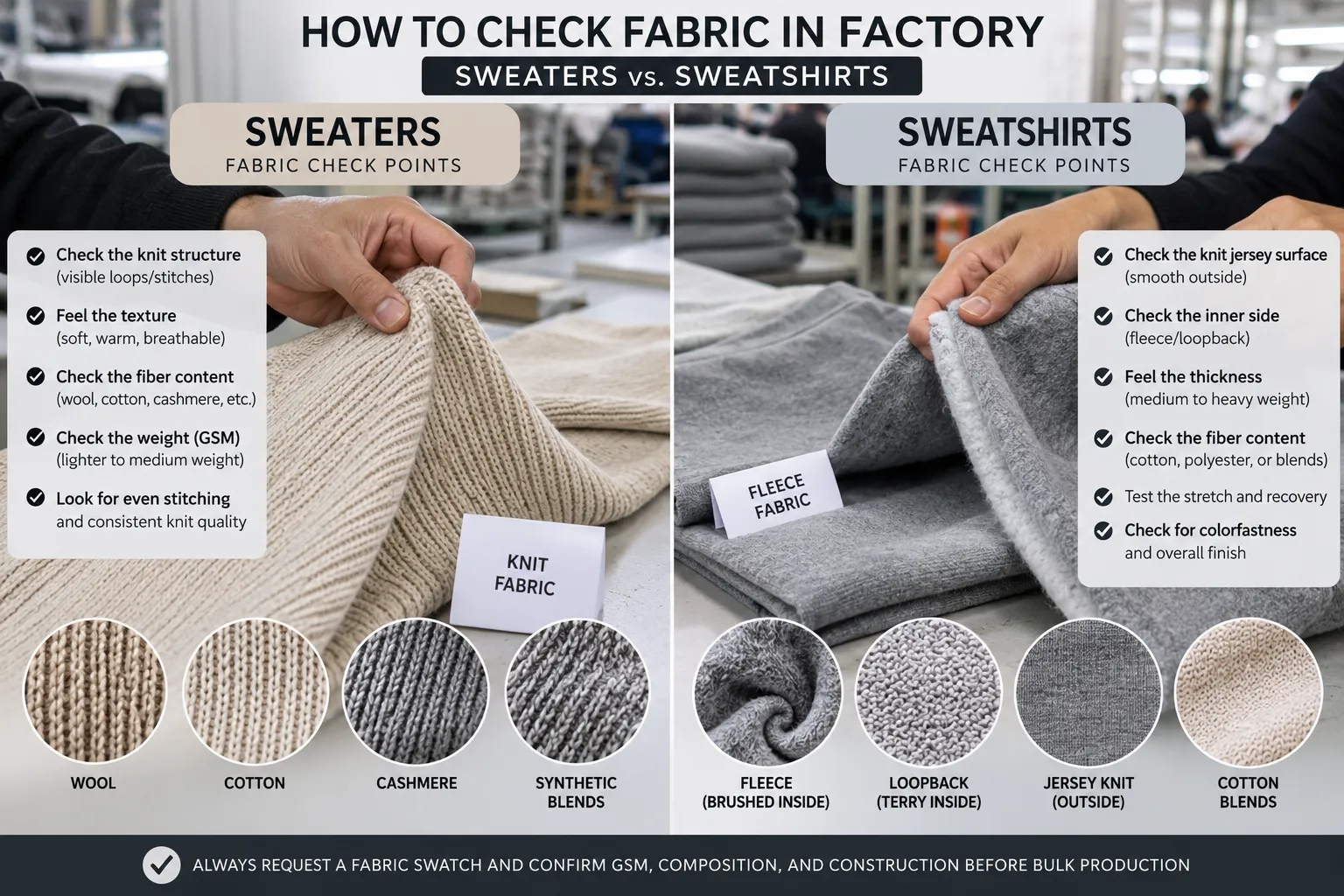
Before a sweater or sweatshirt ever reaches the shelf, fabric quality is checked carefully on the factory floor. This usually includes checking GSM (grams per square meter) for weight consistency, checking for even dye and color fastness, running a pilling and shrinkage test, and inspecting the knit or fleece for any loose threads, holes, or weak stitching. A strong quality-check process at this stage ensures the final garment holds its shape, color, and softness wash after wash.
Common Machines Used in Sweater & Sweatshirt Production
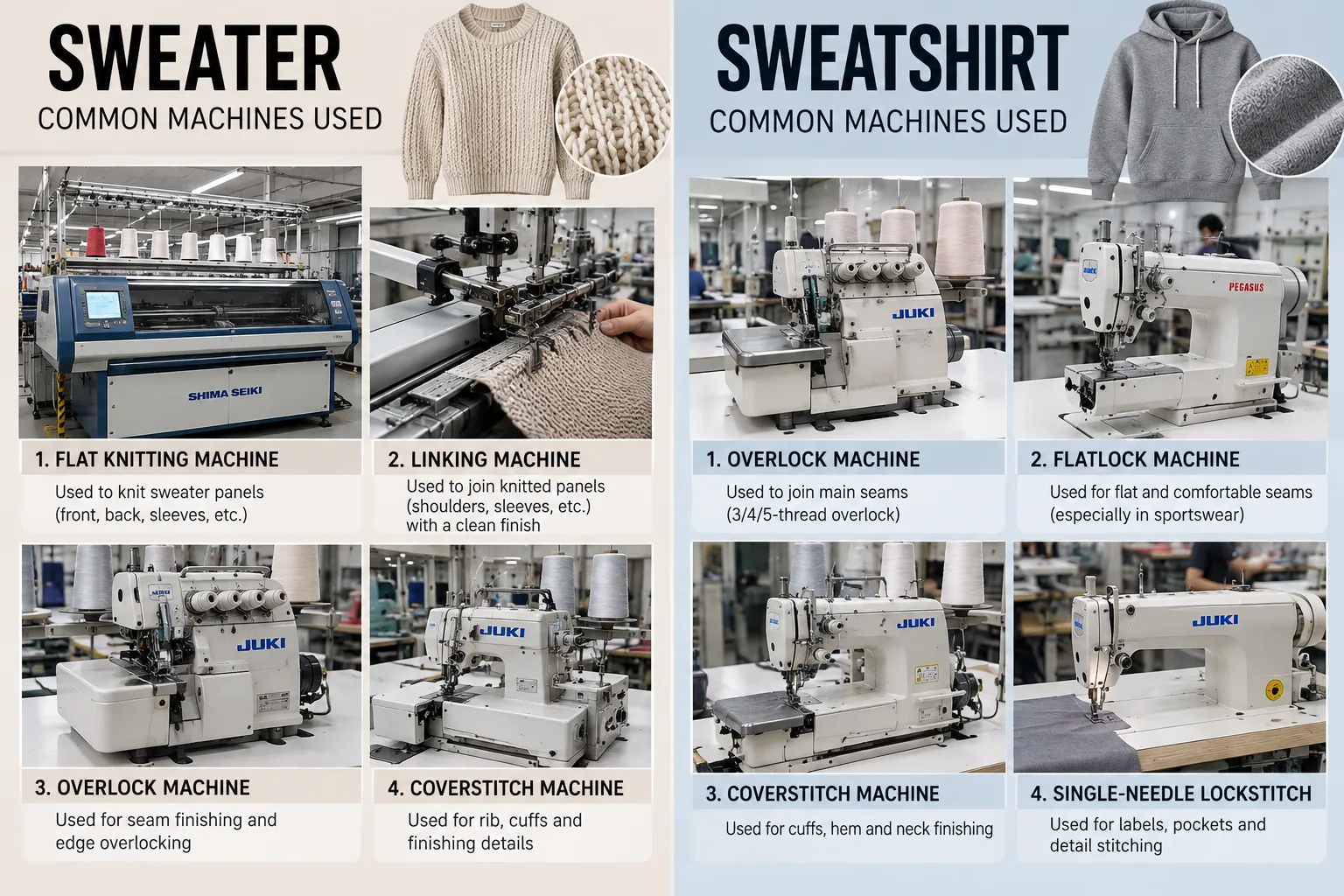
Manufacturing sweaters and sweatshirts involves a mix of specialized machinery. Sweaters typically go through flat-knitting or circular-knitting machines, while sweatshirts rely on fleece-knitting machines and brushing machines to create that soft interior lining. Both then pass through cutting machines, industrial overlock and flatlock sewing machines for stitching, and finally pressing/finishing machines before packaging.
Our Manufacturing Process
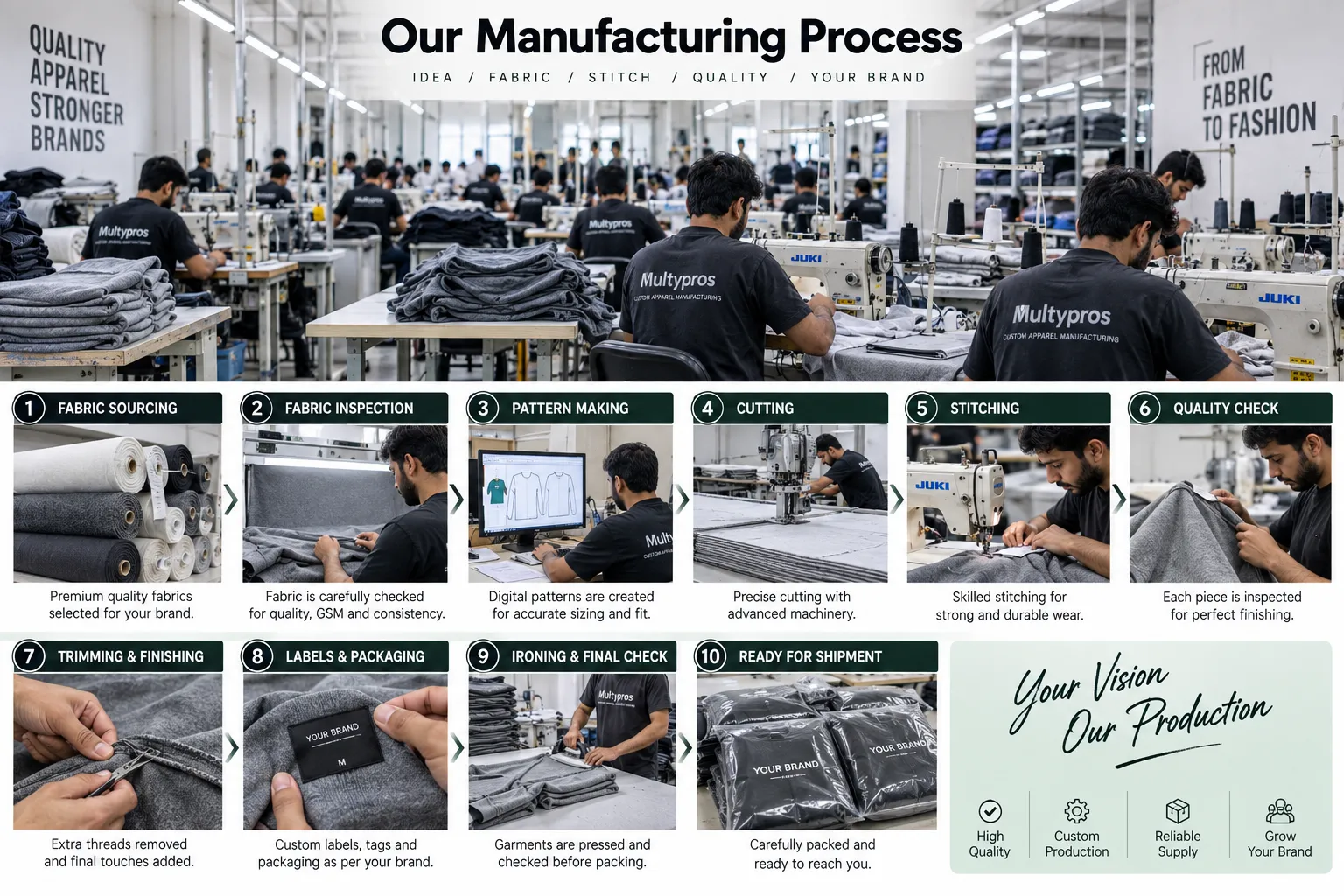
Our manufacturing process is designed to keep quality consistent from start to finish. It begins with fabric sourcing and quality inspection, followed by pattern-making and cutting according to size specifications. Next comes stitching and assembly, where sweaters are knitted to shape and sweatshirts are cut-and-sewn with fleece lining. Every batch then goes through a multi-point quality check, finishing and pressing, and finally packing — ensuring each piece meets the required standard before it ships out.
Frequently Asked Questions
1. What is the main difference between a sweater and a sweatshirt?
A sweater is knitted from wool, cotton, or cashmere, giving it a finer, layered look, while a sweatshirt is made from fleece-lined cotton fabric, giving it a thicker, more casual feel.
2. Which is warmer, a sweater or a sweatshirt?
Both can be warm, but sweatshirts tend to feel heavier due to the fleece lining, while sweaters offer warmth that’s more breathable thanks to their knit structure.
3. Can a sweater be worn to the office?
Yes, sweaters are generally more office-appropriate than sweatshirts because of their refined, layered look, especially styles like crew neck or V-neck pullovers.
4. Is a hoodie considered a sweatshirt?
Yes, a hoodie is a type of sweatshirt that includes a hood and often a front pocket, making it a more casual, sporty version of the classic crewneck sweatshirt.
5. What fabric quality checks are done before manufacturing?
Factories typically check GSM (fabric weight), color fastness, shrinkage, pilling resistance, and stitching strength before fabric is approved for production.
6. Can I place a bulk order for custom sweaters or sweatshirts?
Yes, bulk and custom orders are available. You can submit an RFQ (Request for Quote) with your fabric, quantity, and design requirements to get started.
Looking to Order Sweaters or Sweatshirts in Bulk?
Whether you need custom sweaters, sweatshirts, or hoodies for your brand, team, or retail store, we can help you source and manufacture quality apparel at competitive prices.
Request a Free Quote (RFQ) — tell us your fabric, quantity, and design requirements, and our team will get back to you within 24 hours.
Request a Quote